Why journalism?

As a journalism major, I constantly asked by others two questions. These questions, can be divided into two categories, which unfortunately solely consist of the two Ws.

  1. What do plan do with that?
  2. Why journalism?

Well, I don’t have my answer to the first question (yet!). But after visiting four separate nations and learning about their perception of news media and communications usage, I found a workable answer for the second question–– journalism matters. Unlike the false perception that the news media tell us what to think about under one lens, the only agenda of news media is to spread information. Only then, is it up to the people to decide how to handle what they receive.

The only darkness that will ever occur is when elements of our world are unseen. It still amazes me how this darkness has affected the history of humankind through mass communication, starting in the 1400s. After Gutenberg incorporated movable type into his printing press, he attempted to redefine what it meant to liberalize the playing field of receiving information. Rather than monks painstakingly transcribing the bible, his revolutionary approach to movable type created a gateway for others to access information.

However, the spread of information via print quickly led into another weapon used by the Catholic Church–– indulgences. While we witnessed Martin Luther’s approach to solving Catholic corruption through protestantism, it’s also important to note that he used propaganda himself. Through his connections with Lucas Cranach the Elder (a renaissance artists who owned a print empire), Luther utilized movable type to persuade others to join his movement. However, Luther was also very anti-Semitic, which proves his movement was not privy from solutions. Instead, it led to problems which inspired the Third Reich to assume control over Germany after the collapse of the Weimar Republic in the 1930s.

Paris and Prague were cities that were overtaken by the Nazis to defend their honor. Synagogues were destroyed. Millions fled or were deported to labor/death camps. And the Nazis engrained their swastikas into these places, forcing people to fall in line with their ways.

In Poland, the Nazis emphasized this submission through publications and radio stations. Death lists were displayed publicly created to “scare” Poles into joining the German army. German newspapers only showed the good. Any newspaper that portrayed reality was illegal. Through coercion and propaganda, reality was ignored, sideline

In the Berlin Topography of Terror Museum, I was shown a photograph, famously known as The Last Jew in Vinnitsa. The composition of the photo portrays the calculated cruelty of the Nazis, as a Nazi officer prepares to shoot a well-dressed Jewish man. The officer is surrounded by soldiers who stand behind the officer as he holds his pistol. The Jewish man scowls at the camera. There is no fear in his eyes, but rather a hatred of being less than human. Another piece of waste into the pit of bodies below.
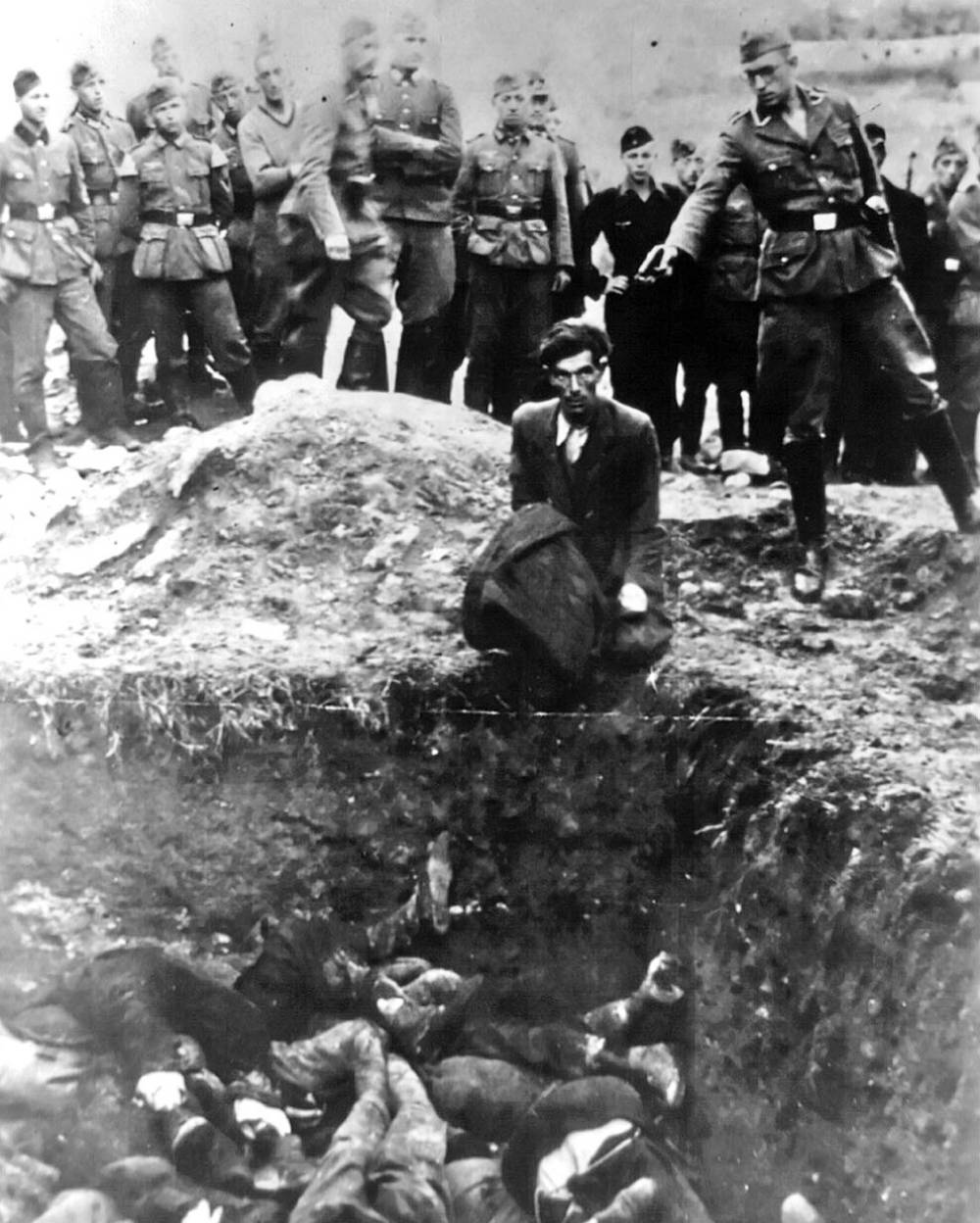
Image result for nazi photograph man in ditch
The Last Jew in Vinnitsa. [Photographer unknown). 
Our tour guide told us that she wasn’t sure why the photographer took this picture, as it was assumed that photographer worked extensively with the Nazis to portray them in their best light. But this was their worst light. There is no individuality in a group that aspires for supremacy. Instead, there is ignorance and cold-blooded ruthlessness. And most importantly, there is no question of authority.

I want to believe the photographer did question the authority of the Nazi party when he took the photograph. But unfortunately, it’s also very likely that the photographer was just “following orders” like the hundreds of other Nazis who were asked about their crimes. While we may never know the answer, today’s society reflects a more puzzling alternative to groupthink.

In this way, the Web gives me hope in individuality, especially if the access of information is limitless. Most importantly, it gives those who question authority a platform to express their views. Unfortunately, censorship still occurs in many countries, but the internet has changed the way we relate to people. Even in nations with limited press freedom, organizations like Radio Free Europe still find a way to give them updated access to information.

This is the future of communication. Regardless of your major, activism revolves around different exposures. To do this, we rely on informants or journalists. Hell, if journalism was not considered important then why is the tallest building in the E.U. a television tower? Despite communications’ constant misuse for propaganda, we can only hope that people will expand their media diets to include reality and truth. Through these items alone, journalism is the only way to prepare us for any future battles that may come our way.

-Abby Gibbs
Wittenberg: The fulcrum of the Reformation agenda through art

During our tour of Wittenberg, the town where Martin Luther spent two-thirds of his life, we discovered three influential pieces of art that stood out to us.

Lucas Cranach the Elder’s Wittenberg Altarpiece

A close friend of Martin Luther, Lucas Cranach the Elder was a German renaissance painter who lived in Wittenberg during the same period of time as Luther. Cranach, a court painter for the elector of Saxony, lived and headquartered his print empire in Wittenberg for almost 45 years. He was also an influential member of the Protestant Reformation, supporting Luther’s ideals through altarpieces and pamphlets spreading Luther’s protestantism.

While most of Cranach’s paintings have been sold off, his altarpiece remains the forefront of the Town and Parish Church of St. Mary’s. Luther preached many sermons in the city’s church and encouraged Cranach to develop an anti iconoclastic altarpiece to instill his message. Even after the establishment of movable type, art was still a preferred source of spreading information and propaganda to the masses.  

Because Luther did not want saints to be portrayed as idols, Cranach made his triptychs (trifold altarpiece) representative of the Protestant ideology. In the left panel, followers of Luther are baptized. This symbolizes the rebirth of those wishing to become Protestant. In the middle, followers of Luther wearing crimson red (ironically the color of mourning for Catholic priests) surrounded by hues of brown are surrounded by a table. The table is round because every follower has an equal chance of being close to clergy through Jesus and God. This humorously nags at the Catholic reverence for da Vinci’s Last Supper. Finally, the right panel shows repentance, also known as confession being led by a Protestant minister.

The stark contrast of Cranach’s work compared to traditional renaissance paintings immediately struck us as being very different. The colors, muted and somber except for flashiness of the red, was a bold choice for Protestant artists to display their message. Also, the realistic approach of incorporating realistic well-known faces in Carnach’s altarpiece definitely transcended Luther’s message to faith being about the people’s relationship in God rather than the idolatry of saints and priests.

The sculpture of Katharina von Bora

Katharina von Bora is one of the most important figures to the Reformation. She started as a nun but was unsatisfied with her life so she strived to grow reform movement. She ended up fleeing to Wittenberg, where we were on January 19, 2019. Although 15 years younger than Martin Luther, Katharina became his wife.

We thought it was very interesting how Oliver, our tour guide, explained that their marriage was a scandal. Luther, himself, was an outlaw monk and von Bora was a runaway nun. However, their marriage also shaped the course of history. Oliver also explained how at that time, women were to be seen and not heard. However, Luther would proclaim that since she is his wife, she was able to be in discussion rooms and voice her thoughts. Katharina had a very strong-willed personality. Luther was the ideas and the persona, however, she took care of the money and the house like a business.

In Wittenberg stands a statue of Katharina von Bora. It is evident that the ring on her finger was more gold than the rest of the statue. Oliver explained that this was because of the many hands that have touched it. It is a superstition that if one touches her ring, it will bring them a happy marriage. So of course, we had to touch her ring.

Judensau pig carving on Wittenberg Church

One aspect of Wittenberg that really stood out to both of us was why the city had an anti-Semitism symbol still carved into the stone of a church. The sculpture is a graphic image of a sow being suckled by Jews––– symbolizing that Jews are pigs. Oliver said that the phrase on the stone is something that should not be said out loud on the streets anymore. He said it only for educational purposes, however, we could tell that there was a sense of discomfort when he shared this information.

It was very shocking to see this carving, especially ingrained on a church. We both question why it would still be there. However, Oliver mentioned that they kept it up to remind and educate people about the horrific history and anti-Semitism of the area. Similar to any of the Holocaust memorials we have visited on this course, it is more dangerous if we forget horrific incidents in history such as the genocide of thousands of Jews in World War II.

-Abby and Theresa

Then and Now: How technology has changed our media landscape

After visiting the Gutenberg Museum in Mainz, a couple aspects of Gutenberg’s revolutionary approach to printing stood out to us. While the museum addressed the historical aspects of printing such as the invention of movable type in China and Korea with wood, clay and some metal in the thirteenth century, Gutenberg’s revolutionary approach truly liberalized mass communication. However, it is important to note that Gutenberg’s style of printing was not always revolutionary for all classes in the until the Protestant Reformation. After all, Gutenberg assisted in printing materials including indulgence forms for the church, comprised of the wealthy upper class nobility.

Despite Gutenberg’s shortcomings, it’s important to reflect on the ways Gutenberg’s invention has green lighted technologically- innovative approaches to spreading mass media today. Personally, we consider today’s use of social media to be a primary example of the way words are consistently being adapted and shared to all audiences. Without Gutenberg’s invention of an efficient way of printing, social movements would not have occurred with such a drastic effect on social outcomes like the Protestant Reformation. Even today, social media movements such as #BlackLivesMatter and #MeToo create opportunities for public discourse through ubiquitous solidarity.

Because the printing press and the invention of moveable type has allowed for the spread of innovation through communication, our media landscape has changed to increase awareness of how connected we really are with the world around us. But social media also creates a danger for volatile movements that aim to misuse these mediums which were originally intended to benefit others. While the printing landscape certainly delved into this territory of evil (especially illustrated with Hitler’s propaganda below), social media and the internet will survive because of their mutualistic beneficial relationship with the public. 


0119_gutenbergblog_gibbs_06
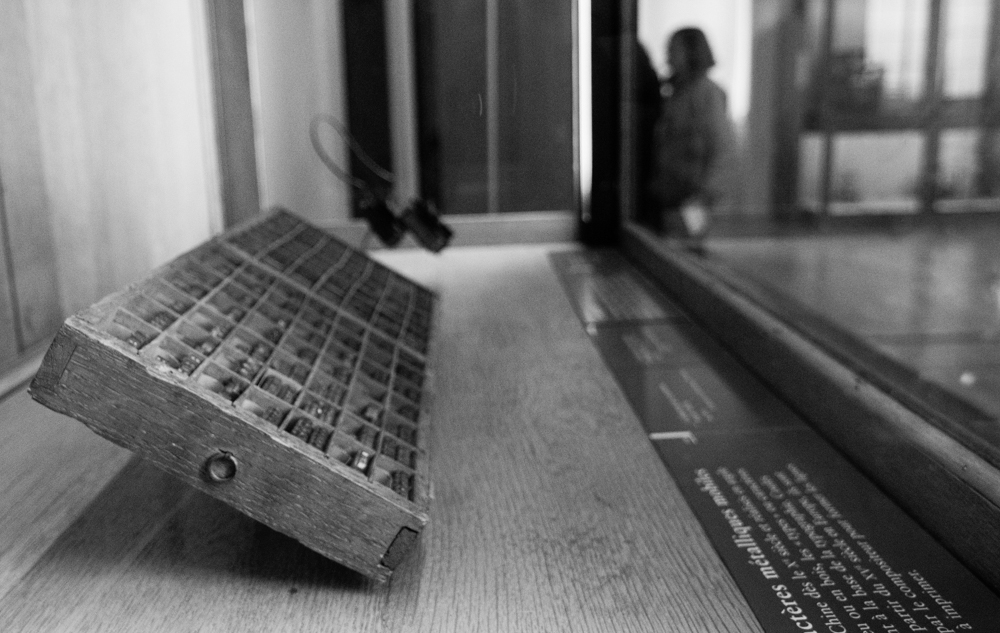
A typekit drawer contains a series of movable type letters at Le Musée des Arts et Métiers in Paris.

On January 8, 2019,  our group visited the Documentation Center Exhibition in Nuremberg. The building of the museum consists of the unfinished Congress Hall of the former Nazi party rallies. This infamous site paints a picture on how propaganda was displayed throughout the 1930s through a series of short films and displays of information. By holding an audio translator to our ears, we came to learn the causes, rationality, and effects of National Socialism through the media. Hitler used propaganda to gain support of German so that he could obtain more power.

Propaganda is defined as information, displayed through the media, that may be misleading in order to influence the public opinion. Leni Riefenstahl, a skilled cinematographer and creator of many propaganda films, created a few films for Hitler about Nuremberg rallies. The way she created these films made it seem like Hitler was a hero.

Unfortunately, propaganda still works today. There are striking similarities between Hitler’s rise to power and the media being published today. The Nazi party was able to shutdown mainstream media credibility. Today, many journalists are not trusted by the government and are slowly being destroyed. It was very interesting, and quite chilling, to make connections when eerie information was projected into our ears.

By Abby and Theresa

My Return to the City of Lights

PARIS–– To begin to describe my return to the City of Lights, I want to start off with a poem my uncle wrote for my parents’ fifth wedding anniversary trip to France.

Never shudder before the Horizon.

Her arms outstretched in waiting embrace.

Take her and the world she offers.

But ever fickle the lover,

She reaches out again

The morning after.

A new glorious Horizon.

A new day.

– Harrison

This is how I feel about Paris. Five years ago, I had the opportunity to explore the city for a week––– living off a steady diet of pastries, camembert and impressionist art. I was enthralled. With my family, I explored countless historical features in a city that values their truest form. Or hoards them, depending on your view of Napoleon.

Let’s take the Eiffel tower, for example. The monument was almost torn down after twenty years post-completion,  yet it reminds us of its inescapable presence each night with a spectacular light show. After dusk, glittering strobe lights bounce across the Tower’s steel beams each hour like electrons buzzing around their nucleus. It’s invigorating and dizzying at the same time, energizing and entrancing one’s mind in an illusory harmony which invoked so much emotion the first time I was in Paris.

Bu on my second trip to Paris through our course this winter term,  my mind was in a less energetic state. Exhausted and jet-lagged, I woke to my class’ adulations of the Tower. While it did look beautiful that morning, I felt nothing. What is wrong with me? I thought. Why don’t I feel as invigorated as I was before when I toured the city?

Unfortunately, I could not answer those questions until the second day of our fast-paced journey in the city. From venturing around the Musée des Arts et Métiers to stumbling upon a yellow vest protest in the middle of the street, I fell in love with Paris again.

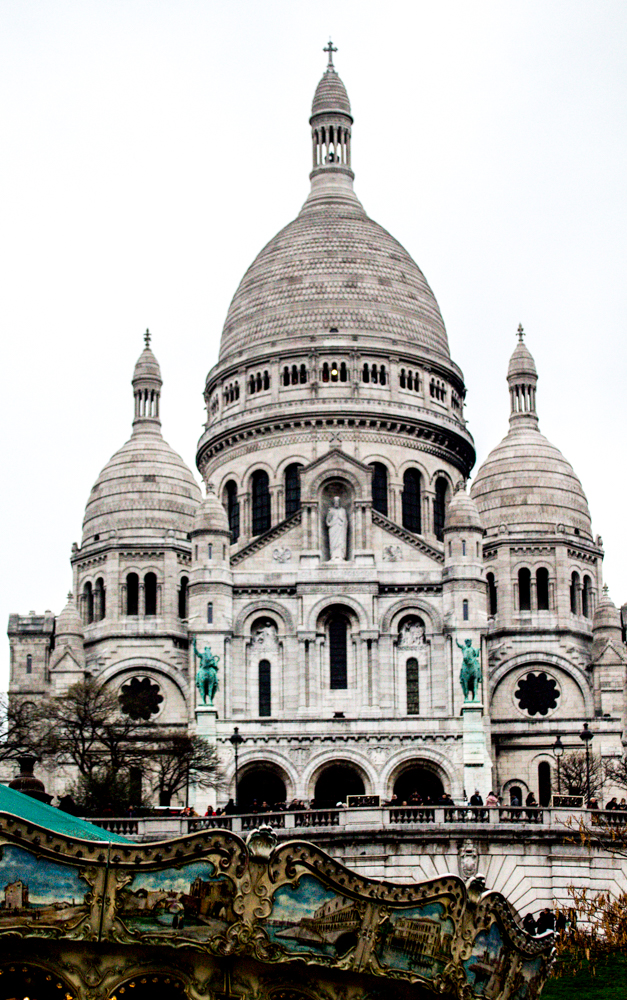
The calculated chaos and beauty made me realize that one can still stumble upon eye-opening experiences that peak your curiosity and wonder. I discovered this when I went to the Sacré-Cœur Basilica with a small group of my classmates. Situated on the outskirts of Paris in Montmartre, the basilica attracts almost 10 million visitors per year. Built between 1875 and 1914, Sacré-Cœur was founded as a sanctuary for France; a political promise after the defeat of the French army in the Franco-Prussian war in 1871.

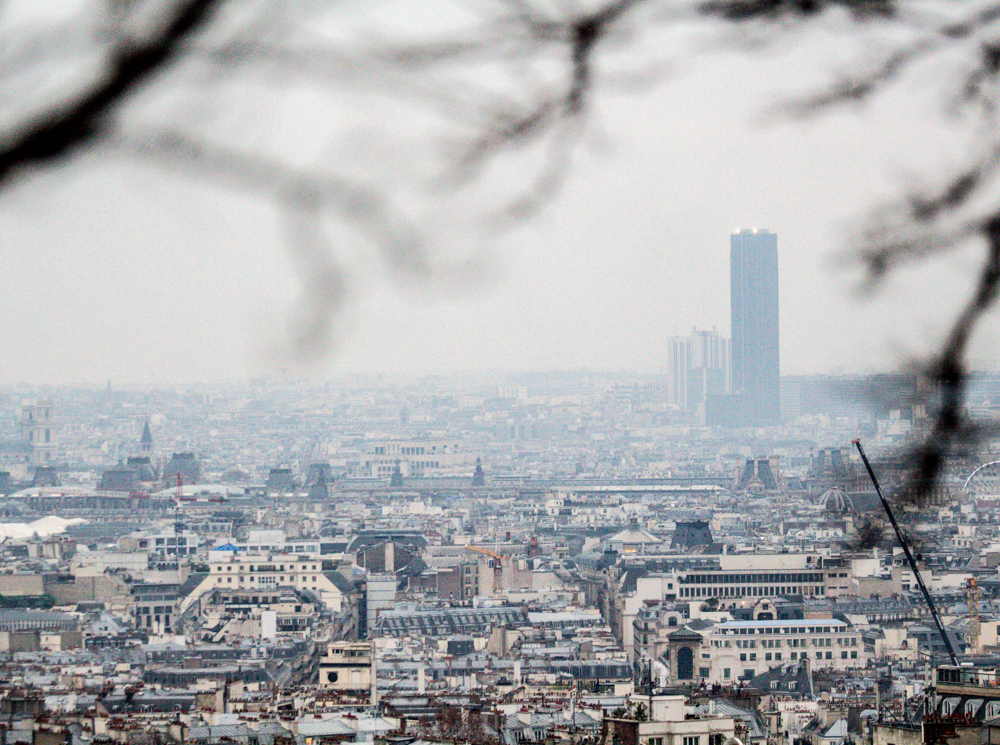
Similar to the French, the monument united us all with its 205-step incline after several metro stops (and unexpected detours).  Despite the fatigue in our muscles, we charged ahead and lost our breath once we had reached the top (both literally, and figuratively). Even with the mist, the view was spectacular. Unlike dreamy day with skies outstretched in blue, it was refreshing to see the city’s horizon faded over the gothic and modern buildings. Naturally, we were one of the dozens of tourists packed against the cast-iron fence at the foot of the basilica, scrambling to get a better picture of the view.

0119_paris_gibbs_01-44.jpg
The view of Tour Montparnasse out of the Paris skyline.

But the picture I needed was right in front of me, guiding me to seek inspiration in my surroundings of Montmartre like those before my time. After all, Montmartre was a sanctuary for countless artists including Picasso and Renoir when they needed to draw inspiration from higher ground. This helped them gain perception as they could see the world and everything above and below it, of which makes the view incredibly spectacular.

After taking in the view, we went inside Sacré-Cœur or “Sacred Heart.” Immediately, I was struck by the delicacy of the basilica. Originally designed by architect Paul Abadie (who originally assisted with the restoration of Notre Dame Cathedral in Paris), Sacré-Cœur reminded me of the ornate intricacy of the Catholic Church.  I always been raised by stain glass windows with golden features (in a church ironically called Sacred Heart), so I was not surprised in at the level of detail in the artwork.

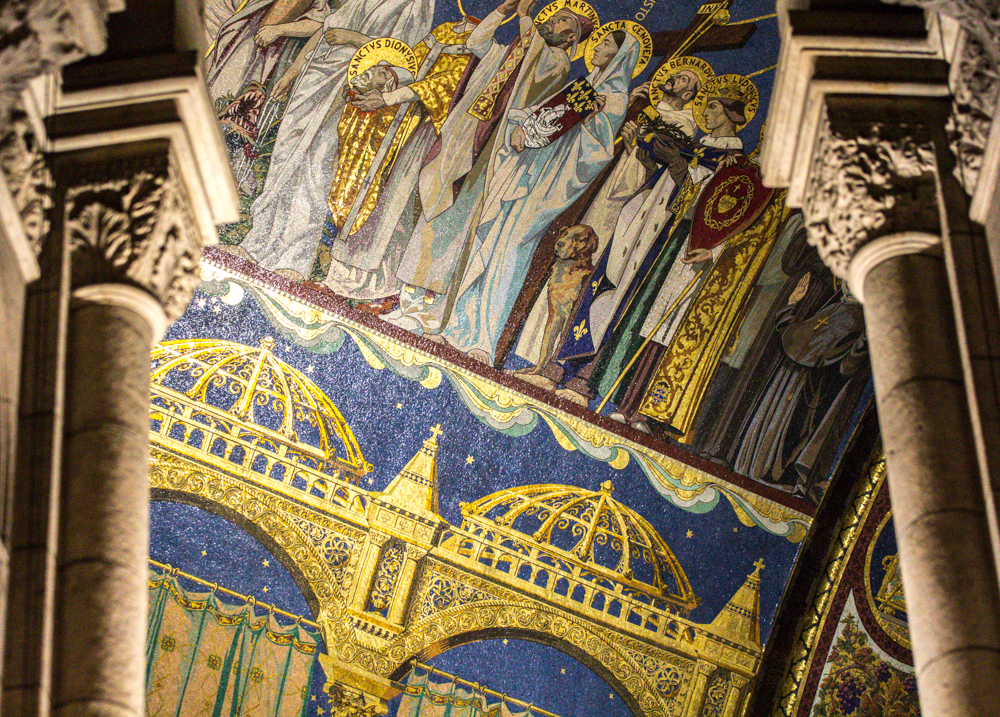
But the stunning refraction of light off the gold paint on the interior walls and ceiling was something that I had never seen before. While most cathedrals rely on windows being a source of illumination, the dazzling display of manipulative artistry in architecture was solely through the paint that was used. Scenes of Christ were emblazoned in gold, brilliantly casting an aura through subdued blue paint. The mesmerizing contrast not only challenged my perspective, but entranced me in the sense of the Eiffel Tower’s strobe light display the first time I was in Paris.

0119_paris_gibbs_01-45.jpg
The walls of Sacré-Cœur adorned with golden highlights. 

Sacré-Cœur

0119_paris_gibbs_01-57.jpg
Sacré-Cœur Basilica rests on a hill overlooking the 18th arrondissement of Montmartre.

For now, I leave my imagination to discover what light I will discover in my third time in the city of inspiration and enchantment.

-Abby